
pba main logo gold med res.webp

PUBLIC BAR ASSOCIATION

Supreme Court

What is the Supreme Court?

The Supreme Court is the highest federal court in the United States. It consists of nine justices who are appointed for life. The Court’s primary role is to interpret the U.S. Constitution and federal laws. Its decisions can have a profound impact on American life, shaping everything from civil rights to government regulations. The cases it chooses to hear often involve unresolved legal questions of national importance.

The Current Court

John G. Roberts, Jr.

John G. Roberts, Jr.

Chief Justice of the United States

Appointed: 2005 by George W. Bush

The 17th Chief Justice of the United States. Before joining the Court, he served on the U.S. Court of Appeals for the D.C. Circuit. He clerked for Justice William Rehnquist and served in the Reagan and George H.W. Bush administrations. Known for his focus on institutional legitimacy and building consensus on the Court.
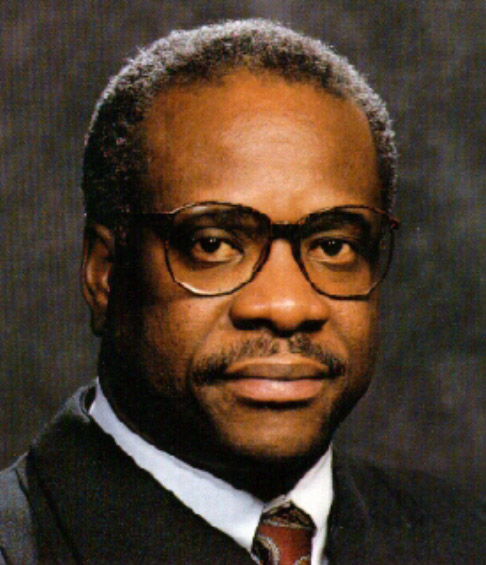
Clarence Thomas

Clarence Thomas

Associate Justice

Appointed: 1991 by George H.W. Bush

The longest-serving member of the current Court. Previously served as Chairman of the U.S. Equal Employment Opportunity Commission and on the D.C. Circuit Court of Appeals. Known for his originalist approach to constitutional interpretation and willingness to overturn precedent he believes was wrongly decided.

Samuel A. Alito, Jr.

Samuel A. Alito, Jr.

Associate Justice

Appointed: 2006 by George W. Bush

Served on the U.S. Court of Appeals for the Third Circuit for 15 years before joining the Supreme Court. Previously served as U.S. Attorney for the District of New Jersey and in the Office of Legal Counsel. Known for his detailed legal analysis and conservative judicial philosophy.

Sonia Sotomayor

Sonia Sotomayor

Associate Justice

Appointed: 2009 by Barack Obama

The first Hispanic and Latina Justice on the Supreme Court. Previously served on the U.S. Court of Appeals for the Second Circuit and as a U.S. District Court Judge for the Southern District of New York. Known for her passionate dissents and criminal justice expertise.

Elena Kagan

Elena Kagan

Associate Justice

Appointed: 2010 by Barack Obama

Former Dean of Harvard Law School and the 45th Solicitor General of the United States. She had no prior judicial experience before joining the Court—the first justice in nearly 40 years without it. Known for her persuasive writing style and ability to build coalitions.

Neil M. Gorsuch

Neil M. Gorsuch

Associate Justice

Appointed: 2017 by Donald J. Trump

Served on the U.S. Court of Appeals for the Tenth Circuit before joining the Supreme Court. Clerked for Justices Byron White and Anthony Kennedy. Holds a Doctor of Philosophy in Law from Oxford University. Known for his textualist approach and focus on the separation of powers.

Brett M. Kavanaugh

Brett M. Kavanaugh

Associate Justice

Appointed: 2018 by Donald J. Trump

Served on the U.S. Court of Appeals for the D.C. Circuit for 12 years. Previously served as White House Staff Secretary under President George W. Bush and worked on the Starr investigation. Clerked for Justice Anthony Kennedy.

Amy Coney Barrett

Amy Coney Barrett

Associate Justice

Appointed: 2020 by Donald J. Trump

Served on the U.S. Court of Appeals for the Seventh Circuit before joining the Supreme Court. Was a law professor at Notre Dame Law School for 15 years. Clerked for Justice Antonin Scalia. Known for her originalist and textualist judicial philosophy.

Ketanji Brown Jackson

Ketanji Brown Jackson

Associate Justice

Appointed: 2022 by Joe Biden

The first Black woman to serve on the Supreme Court. Previously served on the U.S. Court of Appeals for the D.C. Circuit and as a U.S. District Court Judge. Served as a public defender and was Vice Chair of the U.S. Sentencing Commission. Clerked for Justice Stephen Breyer.

Recent & Upcoming Cases

United States v. Skrmetti

Docket 23-477

Whether Tennessee's law prohibiting healthcare providers from administering certain gender-affirming medical treatments to minors violates the Equal Protection Clause of the Fourteenth Amendment.

Garland v. VanDerStok

Docket 23-852

Whether the ATF exceeded its statutory authority by issuing a rule that regulates unfinished frames and receivers (ghost guns) as "firearms" under the Gun Control Act.

TikTok Inc. v. Garland

Docket 24-656

Whether the Protecting Americans from Foreign Adversary Controlled Applications Act, which would effectively ban TikTok, violates the First Amendment.

Free Speech Coalition v. Paxton

Docket 23-1122

Whether Texas's law requiring age verification for websites publishing content "harmful to minors" violates the First Amendment's protections for adult access to protected speech.

FDA v. Wages and White Lion Investments

Docket 23-1038

Whether the FDA acted arbitrarily and capriciously in denying marketing authorization for flavored e-cigarette products.

Kennedy v. Braidwood Management

Docket 23-1239

Whether members of the U.S. Preventive Services Task Force are principal officers who must be appointed by the President, raising constitutional concerns about the Appointments Clause.

Mahmoud v. Taylor

Docket 23-1069

Whether public schools must grant religious exemptions allowing parents to opt their children out of instruction on gender identity and sexuality.

FCC v. Consumers' Research

Docket 23-1161

Whether the FCC's universal service fund contribution scheme violates the nondelegation doctrine by giving excessive discretion to a private entity.

Landmark Decisions

Marbury v. Madison (1803)

Established the principle of judicial review, empowering the Supreme Court to declare laws unconstitutional. This foundational case defined the Court's role as the ultimate interpreter of the Constitution.

Foundational Learn More

McCulloch v. Maryland (1819)

Established that Congress has implied powers under the Necessary and Proper Clause, and that states cannot tax federal institutions. Affirmed federal supremacy over state laws.

Federalism Learn More

Gibbons v. Ogden (1824)

Established that Congress has broad authority to regulate interstate commerce under the Commerce Clause, limiting state interference with national trade.

Commerce Learn More

Brown v. Board of Education (1954)

Unanimously ruled that racial segregation in public schools violates the Equal Protection Clause of the Fourteenth Amendment, overturning Plessy v. Ferguson's "separate but equal" doctrine.

Civil Rights Learn More

Gideon v. Wainwright (1963)

Established that the Sixth Amendment requires states to provide counsel to defendants in criminal cases who cannot afford an attorney, ensuring equal access to justice.

Criminal Justice Learn More

Miranda v. Arizona (1966)

Required that criminal suspects be informed of their constitutional rights before police questioning, including the right to remain silent and the right to an attorney.

Due Process Learn More

Loving v. Virginia (1967)

Struck down state laws banning interracial marriage as violations of the Equal Protection and Due Process Clauses, affirming marriage as a fundamental right.

Civil Rights Learn More

New York Times Co. v. United States (1971)

Held that the government could not prevent the New York Times and Washington Post from publishing the Pentagon Papers, establishing strong protections against prior restraint of the press.

Free Speech Learn More

United States v. Nixon (1974)

Ruled that executive privilege is not absolute and the President must comply with subpoenas in criminal proceedings, leading to President Nixon's resignation.

Executive Power Learn More

Obergefell v. Hodges (2015)

Ruled that the fundamental right to marry is guaranteed to same-sex couples by both the Due Process and Equal Protection Clauses of the Fourteenth Amendment.

Equal Protection Learn More

Loper Bright v. Raimondo (2024)

Overturned Chevron deference, ruling that courts must exercise independent judgment in interpreting statutory ambiguities rather than deferring to agency interpretations.

Federalism Learn More

Trump v. United States (2024)

Held that former presidents have absolute immunity from criminal prosecution for official acts within their core constitutional powers, and presumptive immunity for other official acts.

Executive Power Learn More